



Ganglion Cyst of the Hand and Wrist: What Katy Patients Should Know
Published on by The Hand & Plastic Surgery Center of Katy
Have you noticed a small, round bump on your wrist that seems to appear and disappear like magic? Does it sometimes hurt and other times cause no trouble at all? You’re likely dealing with a ganglion cyst – one of the most common hand and wrist conditions we see here at The Hand & Plastic Surgery Center of Katy.
These mysterious little lumps can be confusing and concerning, especially when they pop up seemingly overnight. The good news? Ganglion cysts are completely benign and rarely cause serious problems. Let’s dive into everything you need to know about these peculiar bumps, from what causes them to your treatment options.
What Exactly Is a Ganglion Cyst?
Think of a ganglion cyst as a small balloon filled with thick, jelly-like fluid that forms near your joints or tendons. These cysts are essentially your body’s way of creating extra space when joint fluid gets trapped in a weak spot of the joint capsule or tendon sheath.
The fluid inside is similar to the lubricating fluid found in your joints – it’s clear, sticky, and completely harmless. What makes ganglion cysts particularly frustrating for many patients is their unpredictable nature. They can grow rapidly, shrink down to almost nothing, or even disappear completely on their own.
Ganglion cysts are incredibly common, making up about 60-70% of all soft tissue tumors in the hand and wrist. They can affect anyone, but we most commonly see them in people between ages 15 and 40, with women being affected about three times more often than men.
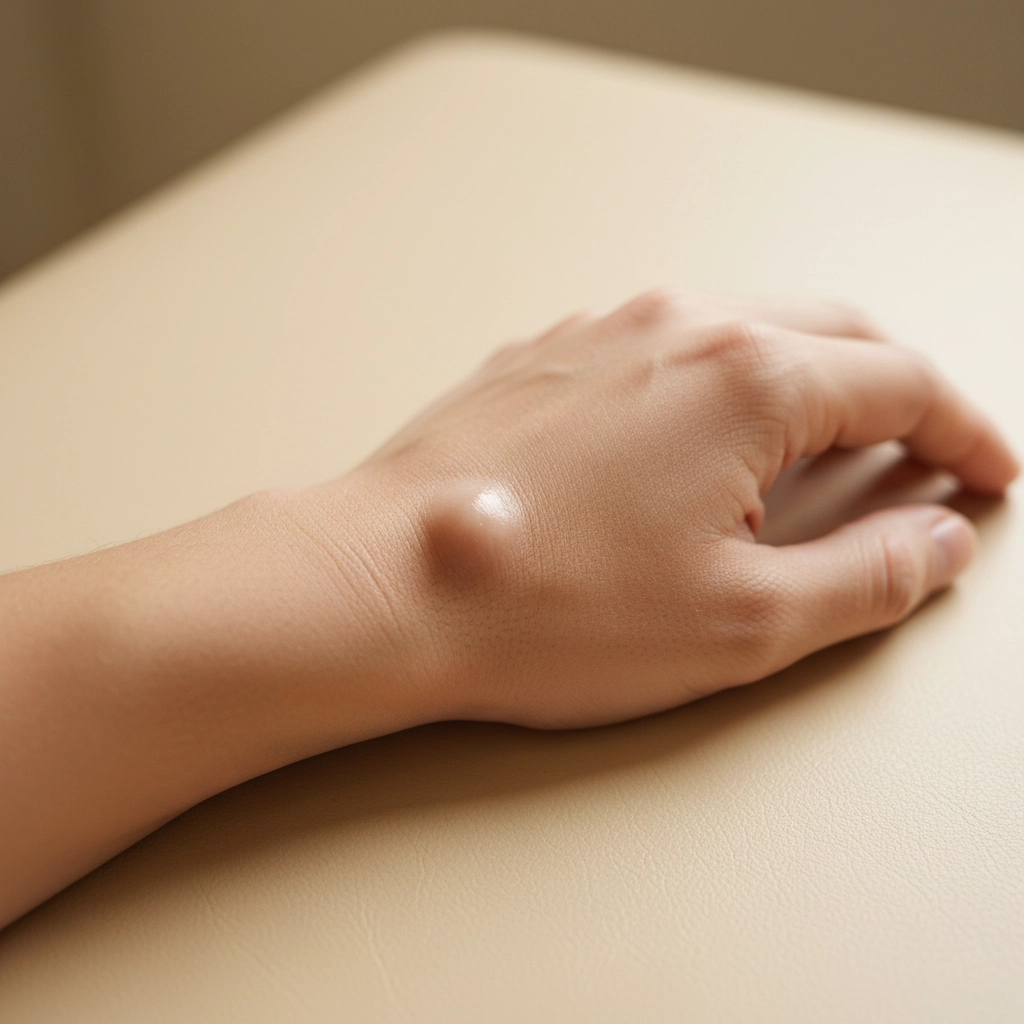
Where Do Ganglion Cysts Typically Appear?
These cysts have favorite spots where they like to set up shop. The most common locations include:
The back of the wrist is by far the most popular location, accounting for about 60-70% of all ganglion cysts. These typically appear as a visible bump that becomes more prominent when you flex your wrist downward.
The palm side of the wrist is the second most common spot. These cysts often sit near the radial artery, which is why your doctor will be extra careful during examination and treatment.
The base of your fingers on the palm side can also develop smaller ganglion cysts. These often feel like hard peas under the skin and can make gripping uncomfortable.
The end joint of your fingers sometimes develops tiny cysts called mucous cysts. These are technically a type of ganglion cyst and often occur alongside arthritis in that joint.
Recognizing the Symptoms
Many ganglion cysts are completely painless and cause no symptoms beyond their appearance. However, depending on their size and location, you might experience:
Visible swelling is usually the first thing you’ll notice. The bump might be soft and squishy or feel quite firm, almost like a marble under your skin.
Aching or pain can develop, especially if the cyst presses against nearby nerves. This discomfort often worsens with repetitive activities and improves with rest.
Weakness or stiffness might develop in your wrist or fingers, particularly during gripping activities or when moving your wrist through its full range of motion.
Changes in size are characteristic of ganglion cysts. You might notice the bump growing larger after activity and shrinking when you rest your hand.
What Causes Ganglion Cysts to Form?
The exact cause of ganglion cysts remains somewhat mysterious, but we do know several factors that contribute to their development:
Joint or tendon irritation from repetitive activities can weaken the joint capsule, creating an opportunity for fluid to herniate outward and form a cyst.
Previous injury to the wrist or hand, even minor trauma you might not remember, can create weak spots where cysts later develop.
Underlying arthritis can change the mechanics of your joints, potentially leading to increased pressure and cyst formation.
Age-related changes in your joint tissues can make them more susceptible to developing these fluid-filled bumps.
Interestingly, ganglion cysts are not caused by overuse of computers or repetitive typing, despite what many people believe. While these activities might aggravate an existing cyst, they don’t directly cause them to form.
How Are Ganglion Cysts Diagnosed?
Diagnosing a ganglion cyst typically starts with a simple physical examination. Your doctor will assess the location, size, and consistency of the bump, and may shine a light through it – ganglion cysts often allow light to pass through because of their fluid content.
Imaging studies are rarely needed, but might be recommended to confirm the diagnosis or rule out other conditions:
- Ultrasound can clearly show the fluid-filled nature of the cyst and its connection to nearby joints or tendons
- MRI provides detailed images and is especially helpful for cysts that aren’t easily visible or felt
- X-rays won’t show the cyst itself but can reveal underlying arthritis or bone abnormalities
Your doctor will also ask about your symptoms and how the cyst affects your daily activities. This information helps determine the best treatment approach for your specific situation.
Treatment Options: From Wait-and-See to Surgery
The beauty of ganglion cysts is that many treatment options exist, ranging from doing absolutely nothing to surgical removal. Your choice depends on your symptoms, lifestyle, and personal preferences.
Non-Surgical Treatments
Observation is often the first recommendation, especially for painless cysts. Since many ganglion cysts disappear on their own over time, waiting and watching can be the wisest approach.
Activity modification involves avoiding or reducing activities that seem to make the cyst larger or more painful. This doesn’t mean you need to stop using your hand entirely – just be mindful of what triggers your symptoms.
Splinting or bracing can help reduce cyst size by limiting wrist movement. A simple wrist splint worn during aggravating activities or at night often provides significant relief.
Aspiration involves using a needle to drain the fluid from the cyst. While this provides immediate reduction in size, cysts return in about 50-80% of cases because the root connection to the joint remains intact.

Surgical Treatment
Surgical excision offers the most definitive treatment with the lowest recurrence rates. During this outpatient procedure, your surgeon removes the entire cyst along with a small portion of the joint capsule or tendon sheath where it connects.
The surgery can be performed using traditional open techniques or arthroscopic methods, depending on the cyst’s location and your surgeon’s expertise. Both approaches typically provide excellent results with minimal scarring.
Recovery from ganglion cyst surgery is generally straightforward. You’ll likely have some tenderness and swelling for a few weeks, but most patients return to normal activities within 2-6 weeks.
When Should You Seek Treatment?
You should consider seeing a hand specialist if your ganglion cyst:
- Causes persistent pain that interferes with daily activities
- Creates numbness or tingling in your fingers
- Limits your range of motion or grip strength
- Continues growing larger
- Concerns you cosmetically
- Interferes with your work or hobbies
Remember, ganglion cysts are never cancerous and rarely cause permanent damage. However, getting proper evaluation ensures you receive the most appropriate treatment for your situation.
Recovery and Long-Term Outlook
Most people with ganglion cysts have excellent outcomes, whether they choose surgical or non-surgical treatment. The key is finding an approach that fits your lifestyle and addresses your specific concerns.
If you choose surgery, following your surgeon’s post-operative instructions carefully helps ensure the best possible result. This typically includes keeping the surgical site clean and dry, gradually increasing activity as healing progresses, and attending follow-up appointments.
Even after successful treatment, there’s a small chance ganglion cysts can return. However, recurrence rates are much lower with surgical excision compared to aspiration alone.
Your Next Steps
Don’t let a ganglion cyst control your daily activities or cause ongoing worry. At The Hand & Plastic Surgery Center of Katy, we specialize in comprehensive evaluation and treatment of all hand and wrist conditions, including ganglion cysts.
Our experienced team understands that every patient’s situation is unique, and we work with you to develop a treatment plan that fits your needs and lifestyle. Whether you’re dealing with pain, concerned about appearance, or simply want peace of mind, we’re here to help.
Ready to take the next step? Contact us today at 832-232-HAND(4263) to schedule your consultation and discover how we can help you get back to doing the things you love without discomfort or concern.